Beijing has emerged as one of China’s strongest hubs for advanced dental and stomatological care. For international patients, that translates into a broad mix of options: elite public specialist hospitals, dental centers inside major general hospitals, and premium private clinics built around convenience and service.
The right choice depends on a few key factors: how complex your condition is, whether you need reliable English-language support, and whether your treatment may require coordination with other medical specialties.
Here’s a practical, fact-based look at Beijing’s leading dental providers, based on public hospital information, specialty rankings, and international patient service capacity.
Tier 1: National-Level Public Specialist Hospitals
These Class III Grade A specialized stomatology hospitals sit at the top of China’s clinical dentistry system. They are the strongest fit for complex cases, oral and maxillofacial surgery, and full-mouth rehabilitation.
Peking University Hospital of Stomatology (PKU Dental)
Founded in 1941, PKU Dental serves as the National Center for Stomatology and has consistently ranked first in national dental specialty reputation surveys. The hospital operates a clinical, education, and research model, with 15 clinical departments and 8 medical technology departments. Across its network, it has around 770 dental chairs and 173 inpatient beds.
Where it stands out
- Oral and maxillofacial surgery, including orthognathic surgery, tumor resection, and cleft lip and palate repair
- Complex implantology, including zygomatic implants and full-arch rehabilitation
- Endodontic retreatment and microscopic root canal therapy
- Severe periodontal disease management
- Complex orthodontics and craniofacial deformity treatment
Locations and access
The main campus is located at No. 22 Zhongguancun South Street in Haidian District, near Weigongcun and Metro Line 4. PKU Dental also operates branch clinics in Xidan, Huilongguan, and Tianzhu in Shunyi, which may be more convenient depending on where you are staying.
What international patients should know
- Services are available in English, Japanese, and Korean through the hospital and its International Clinical Division
- Specialist appointments at the main campus are extremely competitive, so booking well in advance is essential
- Appointments can be made through the hospital’s official WeChat mini-program or hotline
- Branch clinics may offer better availability for non-emergency treatment
Best for: Complex or rare oral conditions, and patients who need inpatient oral and maxillofacial surgery.
Beijing Stomatological Hospital (Capital Medical University)
Established in 1945, Beijing Stomatological Hospital is the city’s largest municipal public dental hospital and serves as the host institution for the Beijing Stomatological Medical Quality Control Center. It holds multiple national key clinical specialties, including endodontics, periodontics, and orthodontics. A new main campus in Fengtai District began clinical operations in December 2024, adding to its existing Wangfujing and Tiantan campuses.
Where it stands out
- Pediatric dentistry and early orthodontic intervention
- Microscopic endodontics and retreatment
- Digital orthodontics and implantology
- Oral and maxillofacial surgery, including complex wisdom tooth extraction and trauma repair
What international patients should know
- English and Japanese services are available
- Appointment access is generally somewhat easier than at PKU Dental while still offering top-tier clinical standards
Best for: Families seeking pediatric care, patients needing periodontal or endodontic specialty treatment, and those based in southern or eastern Beijing.
Tier 2: Dental Centers Inside Top General Hospitals
For patients with systemic medical conditions such as cardiovascular disease, uncontrolled diabetes, or blood disorders, dental departments inside top general hospitals offer a major advantage: easier access to multidisciplinary care and hospital-wide backup.
Peking Union Medical College Hospital (PUMCH) — International Medical Services
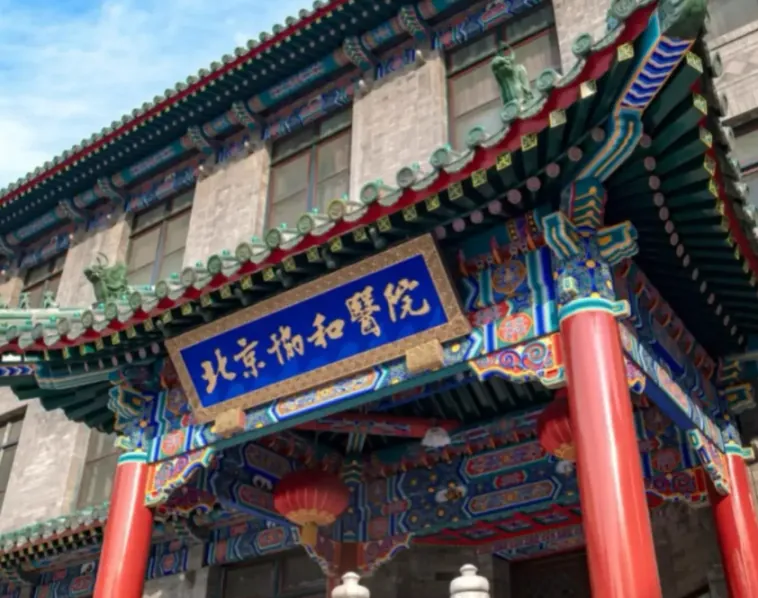
PUMCH is not a specialist dental hospital, but it is widely recognized as one of China’s leading comprehensive medical institutions. Its International Medical Services department runs a dedicated dental center offering comprehensive stomatological care, including periodontal therapy, implantology, microscopic endodontics, orthodontics, and maxillofacial surgery.
Where it stands out
- Dental treatment for high-risk patients with systemic disease, including hypertension, diabetes, and anticoagulation therapy
- Oral mucosal disease diagnosis supported by PUMCH’s immunology and dermatology expertise
- Multidisciplinary team coordination for complex cases
- Painless dental treatment protocols
What international patients should know
- IMS offers support in English, Japanese, French, Korean, Russian, and German
- Patients can book through the English interface in the official PUMCH app, the IMS telephone hotline, or the WeChat mini-program
- IMS supports direct billing with many international insurance providers
Best for: Elderly patients, patients with significant medical comorbidities, and anyone who needs close coordination between dental and medical specialties.
Chinese PLA General Hospital (301 Hospital) — Stomatology Center

Founded in 1953, 301 Hospital is a large military comprehensive hospital. Its Stomatology Center is one of the most technologically advanced in the military medical system, with particular strength in digital implantology and maxillofacial trauma reconstruction. Across all departments, the hospital handles more than 4.9 million outpatient visits annually.
Where it stands out
- Digital and full-arch implantology
- Maxillofacial trauma and reconstructive surgery
- Minimally invasive tooth extraction under monitoring
- Geriatric dental rehabilitation
What international patients should know
- The International Medical Center provides English-speaking coordinators and selected English-capable physicians
- Foreign patients should carry their passports, as security checks are required at entrances
- The IMC operates in a separate building and typically offers longer consultation times of 20 to 30 minutes compared with standard clinics
Best for: Inpatient dental surgery, full-arch implant rehabilitation, and patients who value streamlined hospital logistics.
Beijing Tongren Hospital (Capital Medical University)
With more than a century of history, Tongren Hospital’s dental department benefits from the institution’s nationally recognized ENT background. It is also a doctoral and master’s degree training site with broad sub-specialty coverage.
Where it stands out
- Cranio-maxillofacial conditions linked to ENT pathology
- Standard-of-care periodontal treatment
- Aesthetic and pediatric dentistry
What international patients should know
- English-language services are available
Best for: Patients dealing with overlapping dental and ear, nose, or throat symptoms, or those seeking care in the Dongcheng or Chaoyang area.
Tier 3: Premium Private Dental Clinics
For routine treatment, cosmetic dentistry, or patients who prioritize fast scheduling and English-speaking service, Beijing’s established private dental chains can be a strong alternative. Many employ dentists trained at PKU Dental or Capital Medical University.
Notable options
- Jingsong Dental: A long-established local chain with a dedicated implant center partnered with Straumann
- Arrail Dental / Rytan Dental: Positioned in the mid-to-high-end market, with a reputation for service quality and comfortable clinics
- Taikang Bybo Dental: A nationwide network with multiple Beijing branches
- Maloclinic: An international brand with a strong focus on orthodontics and pediatric care
- Beijing Zhongnuo Dental: Known for complex implant cases, including zygomatic implants
- Beijing Heidelberg United Dental: Focused on immediate-load and digital implantology
What to consider
- Most private clinics run on appointment-only schedules with minimal waiting
- Costs are usually higher than at public hospitals and are not covered by Chinese public medical insurance
- Quality can vary by branch and by dentist, so it is worth checking the credentials and patient reviews of the specific clinician, not just the brand
How to Choose Based on Your Needs
Here’s the short version for matching care needs to the right provider.
Best first choices by case type
- Complex orthognathic surgery, severe jaw deformities, or rare oral tumors: PKU Dental main campus
- Full-mouth rehabilitation with severe bone deficiency: PKU Dental or 301 Hospital
- Pediatric dentistry or early orthodontic screening: Beijing Stomatological Hospital
- Dental treatment in patients with heart disease, diabetes, or anticoagulation therapy: PUMCH IMS
- Routine implants, Invisalign, whitening, or urgent but non-complex extraction: Private clinics or branch clinics of public hospitals
- Dental emergency with facial trauma: 301 Hospital or PKU Dental
Practical Tips for International Patients
Booking appointments
- Public hospitals typically support booking through official WeChat mini-programs, the Jingtong platform, or the 114 appointment line
- PUMCH IMS also offers an English-language app interface
- Private clinics generally accept bookings by phone, WeChat, or through their websites, and most provide English-speaking customer support
Registration
- Bring your passport for first-time registration at public hospitals
- You will usually be issued a hospital medical card
- If you do not read Chinese, a Mandarin-speaking companion or professional medical escort is strongly recommended for standard, non-international outpatient departments
Language support
- The most reliable full English clinical service is typically found at PUMCH IMS and 301 IMC
- PKU Dental and Beijing Stomatological Hospital offer English through their international divisions, but standard clinics primarily operate in Mandarin
- Private clinics vary, so confirm English support before booking
Payment and insurance
- Public hospitals generally accept WeChat Pay, Alipay, and Chinese bank cards
- PUMCH IMS offers direct billing with many international insurers
- 301 IMC may support additional payment methods, but patients should confirm this in advance with their coordinator
- Orthodontics, implants, and cosmetic procedures are generally paid out of pocket and are not covered by Chinese public insurance
Cost expectations
- Public standard clinics: Consultation typically ranges from ¥50 to ¥500; CT scans from ¥400 to ¥1,200
- International Medical Centers: Consultation usually ranges from ¥500 to ¥1,500 or more, with downstream services billed at premium rates
- Private clinics: Pricing is often aligned with international urban markets, and package pricing is common for implants and orthodontics
Bottom Line
Beijing’s dental system is highly tiered, and that specialization is a major advantage for patients who know what level of care they need.
For complex surgical or reconstructive treatment, public specialist hospitals — especially Peking University Hospital of Stomatology — offer resources on par with leading oral health centers. For patients with serious medical comorbidities, PUMCH stands out for its multidisciplinary safety net. And for routine or cosmetic care, high-quality private clinics can offer a smoother, faster experience.
No matter which route you choose, it’s smart to verify the dentist’s specialty credentials and confirm English-language support before your visit.