Chengdu has a strong claim to being China’s dental capital. Modern Chinese dentistry began here, and the city now brings together some of the country’s deepest oral-care resources: a century-old public specialty hospital at the center of the national dental system, major public general hospitals with strong dental departments, and a fast-expanding network of private dental chains.
For international patients, the question usually is not whether Chengdu has good dentists. It is how to choose between very different types of providers based on expertise, appointment difficulty, language support, and price.
This guide draws from multiple Chinese-language review and recommendation articles on dental care in Chengdu. Because some of those sources clearly favor specific private brands, the claims have been cross-checked, consistent points have been retained, and independently verifiable background information has been added. Promotional statistics published by individual clinics, including success rates, branch counts, and discount claims, are treated as marketing unless independently confirmed.
West China Hospital of Stomatology, Sichuan University
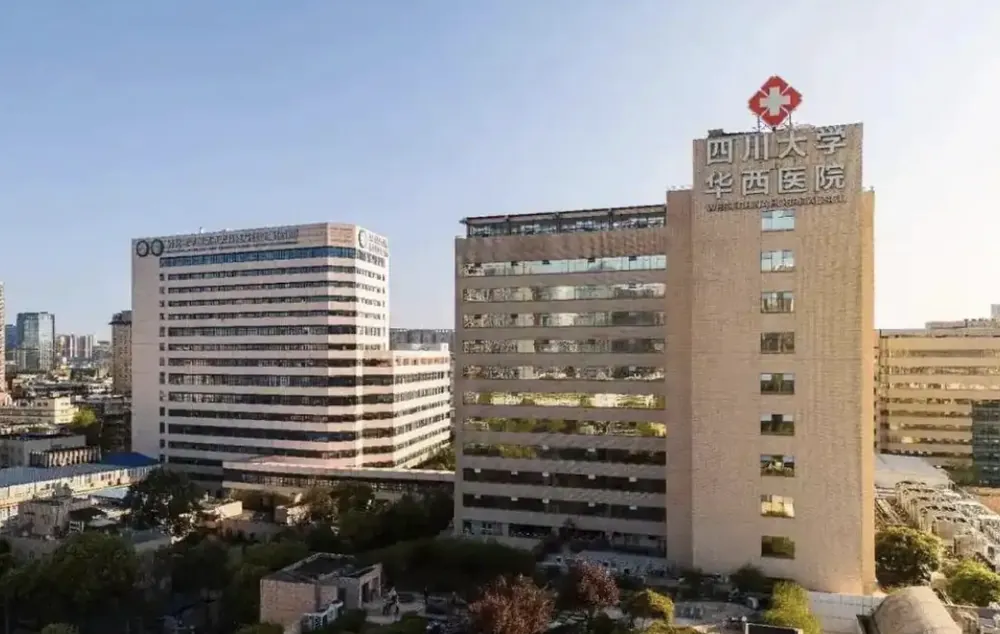
Type: Public, Grade III-A dental specialty hospital; National Center for Stomatology
Address: No. 14, Section 3, Renmin South Road, Wuhou District, Chengdu
Phone: +86-28-85501437
If you ask where to find the best dentistry in China, this is almost always the first name mentioned. In this case, the reputation is backed by facts rather than branding.
Founded from a dental clinic established in 1907, West China Hospital of Stomatology is China’s first dental specialty hospital and is widely regarded as the birthplace of modern Chinese dentistry. It serves as the National Center for Stomatology and the National Clinical Research Center for Oral Diseases, with eight national key clinical specialties spanning the major dental disciplines. Its academic arm, the West China School of Stomatology, ranked 10th globally and 1st in mainland China in dentistry in the 2026 QS World University Rankings by Subject, and the hospital consistently places at or near the top of the Fudan national hospital specialty rankings for stomatology. It also operates at an enormous scale, with daily outpatient visits exceeding 5,000 and annual visits above 1.8 million.
What it does best
- Complex, high-difficulty cases, including orthognathic surgery, cleft lip and palate repair, oral and maxillofacial tumors, temporomandibular joint disorders, and head-and-neck reconstruction
- Advanced implantology, including severe bone-loss cases, zygomatic implants, and full-arch rehabilitation
- Difficult root canals, complex orthodontics, and failed restorations that need revision
- Cases that require multiple specialties to coordinate under one roof
The tradeoffs
The biggest drawback is access. Expert appointments are typically released through the hospital’s official WeChat account around seven days in advance, and they can disappear within minutes. Even with a booking, patients should expect queues for registration, imaging, and treatment scheduling.
It is also not the most practical option for routine care. If you need a standard cleaning, filling, or a straightforward single implant, the time cost can outweigh the clinical benefit.
Language support exists, but it is limited. Many senior specialists have international training backgrounds and can communicate in English, and English-language hospital materials note that international patients can call ahead to confirm appointment procedures and language support. But there is no dedicated walk-in international desk comparable to the International Medical Center at the neighboring West China Hospital, the general hospital, which operates a 24-hour Chinese-English hotline and works with international insurance and assistance companies. For anything beyond a basic consultation, an interpreter or medical escort is strongly recommended.
Bottom line
If your case is complex, high-stakes, or has already failed elsewhere, this is the clear first choice in western China. Just plan ahead, book early, and do not rely on navigating the process alone in English.
Sichuan Provincial People’s Hospital — Department of Stomatology
Type: Public, Grade III-A general hospital; dental department is a provincial key discipline
Address: No. 32, Section 2, West 1st Ring Road, Qingyang District, Chengdu
This is arguably the strongest dental department inside Sichuan Provincial People’s Hospital and one of the strongest dental departments inside a general hospital in Chengdu. Its main advantage is something a specialty dental hospital cannot fully replicate: broad multidisciplinary backup.
For patients with hypertension, diabetes, cardiovascular disease, or advanced age, receiving dental treatment inside a full-service hospital can meaningfully reduce risk. That matters for extractions, implants, and any procedure that may require closer medical supervision.
The department covers implants, periodontal treatment, minimally invasive extractions, microscopic root canals, pediatric dentistry, orthodontics, and restorative work. Appointments are also materially easier to obtain than at West China Hospital of Stomatology. Pricing follows public-hospital standards, and basic services such as fillings, extractions, and basic root canals fall under medical insurance reimbursement rules for insured patients.
Best for
- Older patients
- Patients with underlying medical conditions
- Routine to moderate implants and restorations
- Anyone who wants public-hospital rigor without the intense booking competition at West China
Chengdu Stomatological Hospital
Type: Public, municipal dental specialty hospital
Location: Jinjiang District, near Huaxingzheng Street, central Chengdu
Chengdu Stomatological Hospital is a long-established municipal specialty hospital and a common choice for locals seeking everyday dental care. Across multiple independent recommendation lists, it shows up as a dependable mid-tier public option with transparent pricing, shorter waits than West China, and solid experience in pediatric dentistry, orthodontics, periodontics, and routine implants.
For standard fillings, cleanings, children’s dental care, and uncomplicated orthodontics, it may offer the best balance in central Chengdu between public oversight and practical convenience.
Best for
- Everyday dentistry
- Children’s dental care
- Routine orthodontics
- Budget-conscious patients who still want a public specialty institution
Other Public Hospital Dental Departments Worth Knowing
Several other public general hospitals also have capable dental departments and appear repeatedly in local recommendations. They are not usually destination choices for international patients, but they are useful options to understand.
Chengdu First, Second, and Third People’s Hospitals all operate dental departments within municipal Grade III-A general hospitals and cover the full range of common dental treatment. The Second People’s Hospital is locally noted for pediatric orthodontics and for running no-holiday clinics, which can be useful for patients with tight schedules. The Third People’s Hospital has a large dental team, many trained at West China, and a reputation for transparent, value-oriented pricing.
The Western Theater General Hospital, formerly Chengdu Military General Hospital, is particularly strong in oral and maxillofacial surgery, complex extractions, and maxillofacial trauma.
The Hospital of Chengdu University of Traditional Chinese Medicine offers a differentiated option that combines conventional dentistry with TCM approaches. It is locally recommended for chronic oral mucosal conditions such as recurrent ulcers and burning mouth syndrome.
For international patients, the limitation is clear: these departments generally do not offer meaningful English-language support. They are workable with a Chinese-speaking companion or a professional medical escort, but difficult to navigate alone.
The Private Dental Market
Chengdu’s private dental sector is large, competitive, and highly uneven. One of the clearest signals from the source material is that different recommendation articles tend to promote different private brands. That alone is a good reminder to treat clinic marketing carefully.
Still, there are some objective advantages that the better private providers offer over public hospitals.
What stronger private clinics do well
- Same-day or next-day appointments
- Evening and weekend availability
- Private treatment rooms and more service-oriented patient flow
- Digital workflows, including intraoral scanning and guided implant planning
- An experience that often feels closer to private dental care in North America, Europe, or Australia
Many private providers are also designated medical-insurance institutions, though that is mainly relevant for Chinese residents. The strongest single quality signal in Chengdu’s private dental market is whether senior dentists trained at, or previously practiced at, West China Hospital of Stomatology.
Names that appear repeatedly across sources
Chengdu Xinqiao (New Bridge) Dental Hospital was founded in 2003, holds a Grade III dental specialty hospital license, and operates multiple branches across the city. It is repeatedly described as strong in implants and orthodontics, with a physician roster heavily shaped by West China-trained dentists.
Aurora Dental is a local chain positioned around an American-style private-care model, with multiple branches and a focus on implants, orthodontics, and cosmetic dentistry.
Sanbei Dental is a national premium chain whose Chengdu flagship is a large facility built to Grade III standards, targeting high-end implants, invisible orthodontics, and aesthetic restoration.
Tang Dental and Jinqin Dental are long-running local chains with broad neighborhood coverage, oriented more toward affordable routine care such as cleanings, fillings, pediatric prevention, and simple restorations.
There are also specialty implant clinics, including Anyu Dental Implant Hospital, which traces its roots to a government-established implant center from the early 1990s. But published figures from such clinics, including cumulative case volumes, success rates above 99 percent, or claims of being 30 to 50 percent cheaper than West China, should be treated as self-reported marketing unless independently verified.
What to watch out for
Aggressive discount ads are common. A headline price for implants may not include the crown, bone grafting, or other necessary components. Before paying anything, ask for a written, itemized, all-in treatment plan.
Be cautious about clinics implying affiliation with West China, often referred to locally as Huaxi. West China Hospital of Stomatology operates only its main campus and two directly affiliated outpatient clinics, in Jinjiang and Wenjiang. Any other so-called Huaxi branch is not an official affiliation.
It is also worth verifying the clinic’s Medical Institution Practice License and checking your dentist’s registration through the National Health Commission’s public database. A legitimate provider should not resist that request.
For implants, orthodontics, and other multi-visit treatment, confirm in writing who will handle each stage of care and what happens if the clinic closes or if you leave Chengdu before treatment is complete.
How to Choose Based on Your Needs
Here is the simplest way to think about the market.
If your case is complex
For jaw surgery, tumors, severe bone-loss implants, or failed prior treatment, start with West China Hospital of Stomatology. A practical alternative is Sichuan Provincial People’s Hospital.
If you have significant underlying health conditions
If you have heart disease, diabetes, advanced age, or other medical complexity, Sichuan Provincial People’s Hospital is the most sensible first option. Other Grade III-A general hospital dental departments are also worth considering.
If you need routine care
For cleanings, fillings, simple extractions, or pediatric dentistry, Chengdu Stomatological Hospital is a strong first choice. A reputable community chain such as Tang Dental or Jinqin Dental can also work well.
If you want implants or orthodontics on your own schedule
An established private chain with a Grade III license and West China-trained doctors, such as Xinqiao, is often the most practical choice. If you can secure appointments, West China remains an option, but convenience will be far lower.
If you are interested in integrative care for chronic oral mucosal issues
The Affiliated Hospital of Chengdu University of Traditional Chinese Medicine is a differentiated option. West China’s oral mucosa clinic is the more conventional alternative.
Practical Notes for International Patients
Language
Outside a limited number of senior specialists at top institutions, do not assume English will be available. West China Hospital of Stomatology does have English-capable staff and accepts advance inquiries about language support, and the adjacent West China Hospital’s International Medical Center operates a 24-hour bilingual hotline. But for actual dental treatment, especially anything involving consent forms or treatment-plan discussions, it is smart to arrange a medical interpreter or local escort service.
Ask for written treatment plans and cost breakdowns. Reputable institutions can often provide English summaries on request.
Booking
Most Chinese hospitals rely on advance online booking through their official WeChat account or app. West China typically releases expert appointments around seven days in advance, and they go quickly. Private chains are usually much easier to book, often by phone or WeChat within a day or two. Walk-in registration still exists at public hospitals, but it is unreliable for specialty care.
Payment and insurance
Basic outpatient dental fees at public hospitals are modest by Western standards. But implants and orthodontics are largely excluded from Chinese public insurance, so the price gap between public and private providers narrows significantly for those categories.
International cards are increasingly accepted in Chengdu, but mobile payment through Alipay or WeChat Pay, both of which support linked foreign cards, is usually the smoothest option. If you have international health insurance, confirm direct-billing arrangements in advance. The International Medical Center at West China Hospital works with international insurers and assistance companies, although actual dental coverage depends on your policy.
Documents to bring
Bring your passport, prior dental records and X-rays, ideally including the original image files rather than only reports, and a list of medications and allergies. Major institutions can generally work with English-language records.
Timing
Chengdu is served by two international airports, and many visitors combine treatment with a longer stay. One common pattern is spending one to two weeks in the city for implant surgery and initial recovery, then scheduling follow-up visits around later travel.
If you are considering orthodontics or multi-stage implants, be realistic about follow-up requirements. If you cannot return, choose a treatment plan that can either be completed during your stay or handed off cleanly to a dentist in your home country.
The Takeaway
Chengdu’s dental ecosystem is genuinely impressive, and arguably one of the deepest in Asia relative to cost. The big picture is straightforward.
West China Hospital of Stomatology stands alone for complex care. Public general hospitals offer safe, affordable, medically supervised treatment for routine and moderate cases. The better private chains deliver convenience, comfort, and faster scheduling for elective work, as long as you verify credentials and insist on a written treatment plan.
The smartest move is not to chase advertising. It is to match the provider to the actual complexity of your case, and to arrange language support before you arrive.
This article is intended as a general information resource based on publicly available materials and does not constitute medical advice. Hospital details, appointment rules, and prices can change over time, so verify everything through official channels before making travel or treatment decisions.